NEWS & ARCHIVES
Nigeria’s Elections: The Republic of Chickens
Jun 02 2026
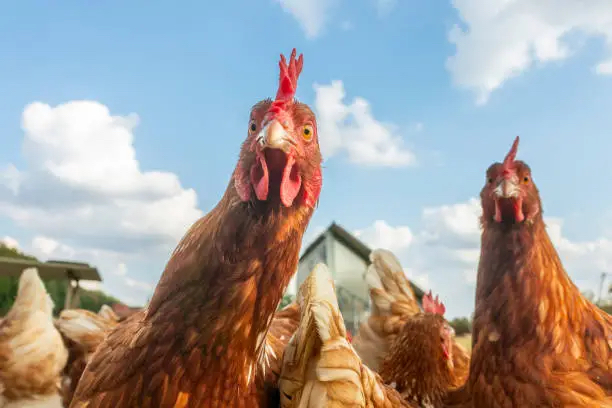
There is something uniquely theatrical about Nigerian elections. Not theatrical in the noble democratic sense — not the spectacle of ideas colliding in public discourse — but theatrical in the way a circus is theatrical: elaborate, repetitive, and somehow both comic and deeply tragic. Watching election season unfold is like rewatching Chicken Run, except the chickens keep voting for the farmers and then acting surprised when someone preheats the oven.
Democracy, we are told, is the sacred mechanism by which the people govern themselves. Yet in Nigeria, elections often feel less like an exercise in self-governance and more like a carefully managed behavioural experiment. The electorate is invited into the coop every four years, encouraged to cluck enthusiastically about “change,” and then ushered back into confinement while the farmers tally the profits.
Ballot Boxes or Decorative Props?
The first illusion is participation itself.
Citizens queue beneath the sun for hours clutching voter cards with the reverence of pilgrims carrying holy relics. There is optimism in the air — that intoxicating belief that perhaps this time the system might function as advertised. But the optimism always feels strangely ceremonial, like the optimism of passengers applauding before the plane has taken off.
Then come the familiar liturgies of dysfunction: missing names, delayed materials, malfunctioning machines, ballot snatching, “inconclusive” results, and the wonderfully vague phrase technical glitches, which in Nigerian politics performs roughly the same role as “God works in mysterious ways” does in theology. It explains everything while explaining absolutely nothing.
One begins to suspect that the ballot box is not so much a tool of democratic expression as a prop in an elaborate national stage play titled Hope Against Evidence.
The Gospel According to Rice
Of course, policy is far less persuasive than carbohydrates.
In more mature democracies, politicians at least pretend to debate healthcare, education, or economic reform. In Nigeria, electoral philosophy has been distilled into a simpler principle: How many bags of rice can fit in the back of a Hilux van?
This is what political analysts politely call “stomach infrastructure,” a phrase so unintentionally dystopian it deserves its own Orwell novel. Entire voting blocs can be swayed by rice, cash envelopes, recharge cards, and promises delivered with the solemnity of divine revelation.
And who can entirely blame the voters? A starving person does not eat manifestos. Poverty transforms democracy into an auction where survival is the highest bidder. The tragedy is not merely that people sell votes, but that the state has engineered conditions where immediate hunger consistently defeats long-term political reasoning.
The farmer throws feed into the cage, and the chickens celebrate the generosity of the hand that built the cage in the first place.
Politicians: Masters of Feathered Camouflage
Nigerian politicians possess a remarkable evolutionary skill: temporary resemblance to ordinary people.
During campaigns they become astonishingly humble creatures. Suddenly billionaires are photographed eating roadside corn, dancing awkwardly at village gatherings, or sweating theatrically in overcrowded markets as though they have spent their entire lives among the common people rather than inside tinted SUVs.
It is political cosplay masquerading as solidarity.
One almost admires the performance. The accents soften. Indigenous languages reappear. Religious devotion intensifies. Every candidate suddenly becomes the physical embodiment of “the people.” Yet immediately after victory, the transformation reverses with almost supernatural speed. The convoy expands, the fences rise, and accessibility evaporates like morning dew.
The chickens discover, once again, that the fox had merely borrowed feathers for the campaign season.
Clucking in Historical Circles
What is perhaps most fascinating is the cyclical nature of the entire exercise.
Hope arrives with predictable regularity. Citizens declare that the upcoming election is “the most important in history,” despite having said precisely the same thing during the previous election, and the one before that, and the one before that. It is like watching someone repeatedly return to a slot machine convinced that statistical probability will eventually reward emotional loyalty.
And perhaps that is the true genius of the system: it survives not because people trust it, but because people cannot afford not to.
To abstain feels immoral. To participate feels futile. So the electorate oscillates endlessly between cynicism and hope — mocking politicians by day and defending them online by night. Nigerians have perfected the art of simultaneously distrusting government while emotionally investing in political messiahs.
The result is a national ritual of disappointment. Every election promises liberation; every administration delivers explanations.
The Flying Machine That Never Leaves the Ground
In Chicken Run, the chickens eventually escape because they realize a profoundly important truth: the farmers were never coming to save them.
That realization has not yet fully arrived in Nigerian political consciousness.
There remains an enduring belief that the next charismatic candidate, the next coalition, the next “game changer” will somehow redeem a fundamentally broken political culture. Yet corruption is rarely an individual defect; it is systemic gravity. Replace one actor without altering the structure and the performance remains largely the same.
Nigeria’s democratic dream resembles a magnificent aircraft perpetually preparing for takeoff. The speeches are delivered. The slogans are painted. The passengers board enthusiastically. But somehow the plane never quite leaves the runway.
And still, every four years, the nation gathers once more at the terminal gate, convinced that this time the engines might finally roar to life.
Perhaps that hope is irrational.
But perhaps it is also the only reason the coop has not completely collapsed into silence.
